On this page
There is a version of the transmission business that runs entirely on email and catalogue attachments, and it works right up until the first warranty claim. The buyers who stay for years do something different: they get on a plane, walk the floor and ask the awkward questions in person. This article summarises what those visits keep confirming, and turns it into a checklist you can run on any supplier — including us.
What this guide gives you
- Who actually travels — the four buyer profiles behind 50+ annual visits, and the trait they share.
- The five checks that appear on every single visit, and what each one is really testing.
- The order in which buyers ask questions — and why the third question usually decides the order.
- The dual-core support model that keeps a distributor's local reputation intact 8,000 km away.
- A reusable visit checklist for auditing any transmission supplier.
01Who actually comes — and why the profile matters
The visiting groups are not tourists looking for a factory photo. Four profiles dominate the calendar:
- Multi-store auto repair chains, who need consistent parts supply across several locations and cannot afford a platform that behaves differently in each store.
- Full-range auto parts trading companies adding transmissions to an existing catalogue, for whom category depth is the whole proposition.
- Professional transmission distributors, the most technically demanding group, who arrive with a list of platforms and expect to see those specific units.
- Engine-parts suppliers expanding into transmissions, who need to understand wear behaviour, testing and warranty exposure before committing capital.
Different profiles, one shared trait: a mature local sales and service network behind them. That single fact explains everything about how they behave on a visit. When a quality problem occurs 8,000 km away, it lands on their reputation, not the supplier's — the end customer in their market has never heard of the factory. That is why visiting buyers are demanding about quality stability and compatibility, and why they ask more questions about after-sales support and technical backup than about price.
02The scale, in numbers
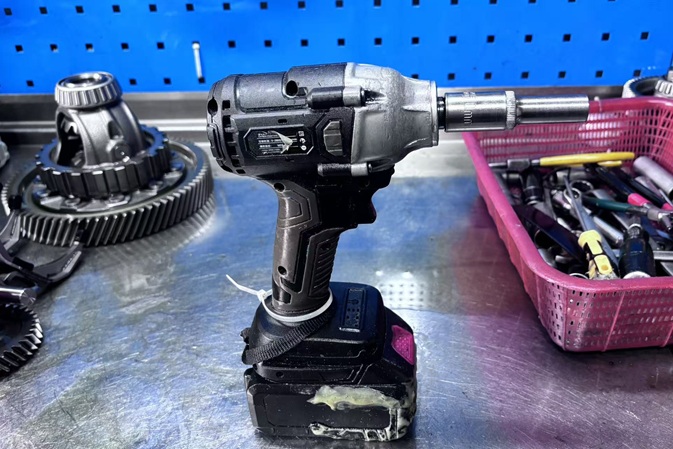
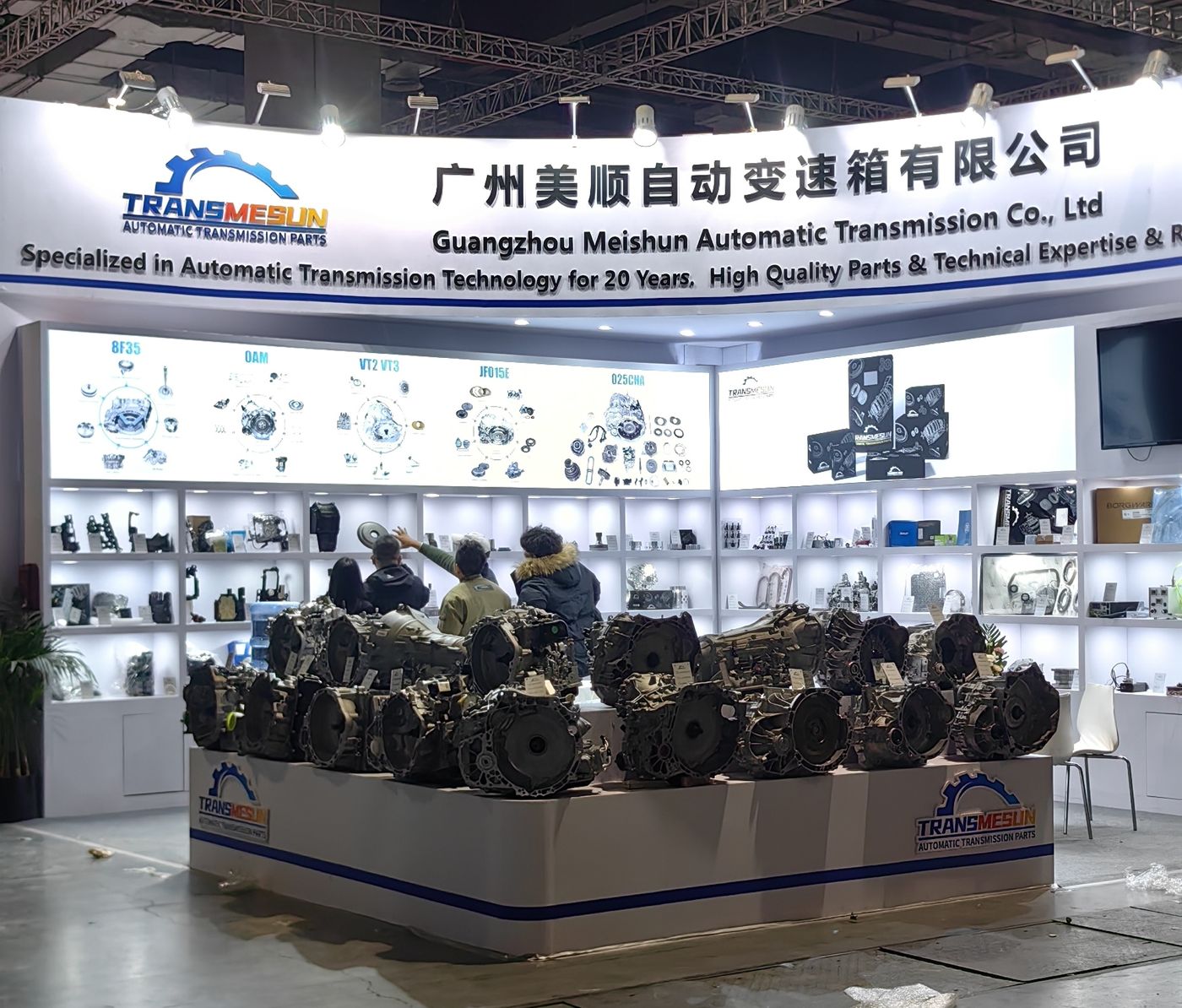
Across 2025 we welcomed more than 50 groups of visiting clients from over 15 countries and regions across Asia, Europe, Africa and the Middle East. Movement continued into 2026: in April alone we hosted professional delegations from Saudi Arabia, Egypt, Russia, Türkiye, the UAE and the Netherlands. Those teams walked the production workshops, the testing centre and the finished-goods warehouse, then sat down on specifications, manufacturing process, quality-control standards, supply chain and after-sales policy. A visit is not a courtesy stop — it is their due diligence.
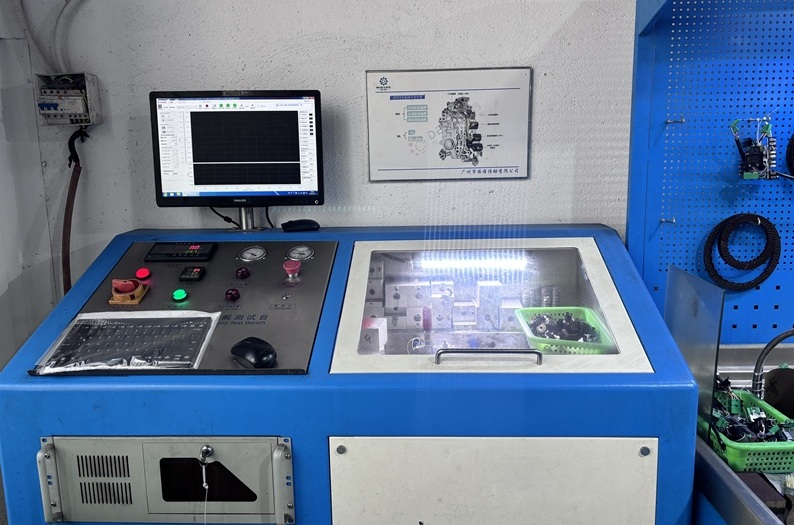
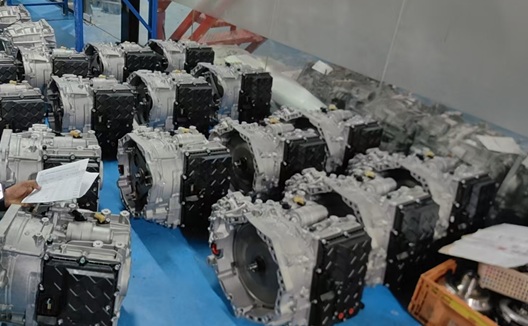
The supporting figures matter as much as the equipment: 5 quality inspectors on the floor, 100 % full-load dyno testing on complete assemblies, and a finished-goods warehouse holding stock of over 10,000 units across new, remanufactured and second-hand transmissions. Together they answer the two operating questions every distributor arrives with: can you cover the models my customers bring me, and can you do it repeatedly?
03The five checks that appear on every visit
After 50+ groups, the same five checks recur regardless of the buyer's market or size. They are worth listing explicitly, because they are also the five things a buyer can verify remotely by video if travel is not practical.
| Check | What the buyer does | What it actually tests |
|---|---|---|
| 1. Production line | Walks the disassembly, cleaning, assembly and finishing stations in sequence | Whether the process is standardised or improvised per unit; whether stations are integrated in-house or outsourced |
| 2. Test bench & dyno | Requests a live run on a unit, and asks to see the recorded result | Whether testing is real and recorded, or a claim supported by a certificate on a wall |
| 3. Warehouse & stock depth | Counts model coverage on the racks and checks shelf labelling | Whether catalogue coverage is stock or aspiration; whether mixed orders are practical |
| 4. Packing & dispatch | Watches packing, asks about pallet construction, protection and marking | Transit damage risk — the most common avoidable loss on a long sea route |
| 5. Documentation & after-sales | Reviews certificates, warranty terms, claim process and technical support routing | What happens after the invoice: who answers when a unit misbehaves three months later |
Why check five is the one that decides
Checks one to four can be convincing on a good day and still not tell you what you need to know. Check five is the one that predicts the next three years, because it concerns the period when neither party is motivated to be charming. A distributor with a mature service network is not looking for a supplier who is responsive while negotiating; they are looking for one who answers when a comeback is in a customer's bay and the technician needs to know whether the problem is the unit or the installation.
04The questions buyers ask, in the order they ask them
The pattern across 50+ visits is consistent: buyers ask about models and stock first, testing second, and after-sales third. The order makes sense — coverage establishes whether a conversation is worth having at all, testing establishes whether the supply can be trusted, and support determines whether the relationship can be scaled. But the decisions usually trace back to the third question, which is why a supplier who is strong on the first two and evasive on the third loses orders they were technically qualified to win.
Buyers ask about models and stock first, testing second, and after-sales third. By the end of the visit, the order decision usually traces back to the third question — not to the first.
05What "support" means to a distributor
This is the part that gets lost in a product catalogue. Most international partners already have a service network in place; what they do not have is a supplier who can help when a unit misbehaves three months after the sale, in a market 8,000 km away.
Two decades in this industry means we have accumulated fault cases and mature solutions across the common transmission families. Our technical team provides one-stop remote guidance covering basic fault diagnosis, accurate fault identification and low-cost repair routes — resolving the large majority of partner after-sales faults without the unit ever coming back. That capability is a by-product of volume: the same failure patterns appear repeatedly across platforms, and a distributor sees each platform only a few times a year while a manufacturer sees it continuously.
The operating model is deliberately dual-core: products plus free, ongoing technical support. Supply the assembly or the part, and keep the partner's end customers running. That combination — not the unit alone — is what stabilises a distributor's local reputation, and it is why the diagnostic content on this site is published openly. Guides such as valve body failure symptoms and transmission model identification are the same material we use in partner training, because a partner who diagnoses accurately orders the right part the first time.
06A visit checklist you can run on any supplier
Take this list on your next plant visit, to us or to anyone else. Every item is something you can see with your own eyes in under two hours.
- Ask for the process sequence and walk it in order — disassembly, cleaning, inspection, assembly, testing, packing. Look for units that have jumped a station.
- Request a live test run on a platform you actually sell, and ask to see the recorded result for that unit. A refusal is an answer.
- Count the coverage in the warehouse against the catalogue you were sent. Shelf labelling and model grouping tell you whether the range is managed.
- Watch one pallet being packed and ask how the packing standard was designed for sea freight.
- Ask about inspection staffing — how many people check, and at which stages.
- Ask what happens on a warranty claim, end to end: who to contact, what evidence is needed, who pays freight, how long a replacement takes to ship.
- Ask for technical support after the sale — is there an engineer reachable, and in what language and time zone?
- Ask for two references in your region, and call them. Reference calls reveal more than any showroom.
If you cannot travel, run the same list over video. Everything except counting the racks by hand can be shown on a call, and serious suppliers will arrange it: production walkthrough, live test run, packing station, warehouse, and the documentation file — all on camera, with your specific platform in frame. The buyers who audit remotely and then place a small trial order are not taking a shortcut; they are running the same diligence in a different order.
07Frequently asked questions
Why do buyers visit a transmission factory before ordering?
Because the two things that decide whether a supplier can support a market — real production and test capability, and stock depth across many platforms — cannot be verified from a catalogue. Visiting buyers also use the trip to test after-sales support in person, which is the criterion that most often decides the order even though it is asked about last.
What should I ask to see on a factory visit?
Ask for a live test run on a platform you actually sell, the recorded result for that same unit, the warehouse coverage against the catalogue you were sent, one pallet being packed, and the documented warranty claim process. Together those five items cover production, evidence, stock, transit risk and after-sales in under two hours.
Can I audit a supplier without travelling to China?
Yes. A structured video audit covers everything except physically counting the racks: production walkthrough, live bench or dyno run, packing station, warehouse, and a review of certificates and warranty terms. Combine that with a one-piece trial order, and you have tested fitment, documentation, packing and response time before committing to volume.
How many buyer groups visit each year?
Across 2025 we hosted more than 50 visiting groups from over 15 countries and regions spanning Asia, Europe, Africa and the Middle East. April 2026 alone brought professional delegations from Saudi Arabia, Egypt, Russia, Türkiye, the UAE and the Netherlands — multi-store chains, distributors and trading companies, most of them arriving with a specific platform list to discuss.
What technical support is included after the sale?
Our engineering team provides ongoing remote guidance on fault diagnosis, fault identification and low-cost repair routing for the platforms we supply. The purpose is straightforward: most after-sales faults can be resolved in the workshop if the technician knows what to check, which keeps the vehicle out of a warranty claim and keeps your local reputation intact.
Do you offer any support during the visit itself?
Visits are structured around your platform list. Bring the models you repair most, and the session covers those units on the bench, the specification data behind them, quality-control stages, packing standards, supply chain and after-sales policy. If your market includes platforms we do not currently cover, you will be told directly rather than sold an approximation.
We host visits year-round and run live video walkthroughs of the production line, the test bench and your exact unit before packing. Send your platform list and preferred timing, and we will build the agenda around it.
Written by the TRANSMESUN Engineering Team
Guangzhou Meishun Automatic Transmission Co., Ltd. rebuilds, tests and exports automatic transmission assemblies and components from a CE-certified plant in Huadu, Guangzhou — 10 production lines, 2,000 m², 20 test benches and 100% full-load dyno testing on complete units.