On this page
- Why the car model is not a specification
- Where the transmission code is located, by platform
- A six-step identification flow you can run in ten minutes
- Generation traps: the same code, different parts
- What our catalog actually covers - the data behind "we stock it"
- The two photographs that prevent wrong-fit orders
- How we confirm fitment before quoting
- Frequently asked questions
Every wrong-fit claim we have ever processed traced back to the same root cause, and it was never a misspelled part number. It was a unit identified by the wrong attribute — the car it came out of, the engine bolted to it, or a number copied from a listing screenshot. This guide is the identification routine our engineers run on every incoming core, written so a workshop anywhere can run the same eight minutes of work before placing an order.
What this guide gives you
- A platform-by-platform table of where the model code physically lives on 13 transmission families.
- A six-step identification flow — scan, read, resolve generation, cross-check, photograph, confirm.
- The generation traps where one code hides several non-interchangeable parts, with worked examples.
- Real catalog and coverage data from our own 214-part-number index, so you can see what "we stock it" actually means.
- The exact two photographs that remove most fitment back-and-forth before a single unit ships.
01Why the car model is not a specification
A single vehicle platform is normally built with two to four different transmissions over its production life. The deciding factors are engine output, drivetrain layout, market emissions package and build year — not the badge on the tailgate. Order by vehicle and your supplier has to guess, and a guess that is 80 % right still produces a return, a customs re-entry and a workshop bay blocked for two weeks.
The table below shows how wide the spread gets on platforms we handle daily. This is the reason our RFQ workflow starts with a code, not with a car.
| Vehicle sold as | Possible transmissions fitted | How different they really are |
|---|---|---|
| VW Passat / Jetta (2009–2016) | DQ200 (dry 7-speed DSG), DQ250 (wet 6-speed DSG), 09G / TF-60SN (6-speed AT), 02E | Different mechatronics, different clutch pack, different fluid — zero interchange |
| Nissan X-Trail / Qashqai | JF011E (RE0F10A), JF015E (RE0F11A), JF016E | Same family lineage, different pulley set, belt and valve body generations |
| Toyota Camry (2012–2017) | U760E (6-speed AT), K114 / K313 belt CVT in other markets | Step automatic versus CVT — nothing is shared |
| Hyundai / Kia 1.6–2.0 (2012–2018) | A6GF1, A6MF1 / A6MF2, D7UF1 dual clutch | Solenoid configuration and mechatronic layout differ by generation |
| Ford Escape / Focus (2013–2019) | 6F35 (6-speed AT), DPS6 / 6DCT250 (dry dual clutch) | Hard parts are unrelated; only the badge is shared |
Note: These are fitment relationships documented in manufacturer parts data and in our own core book. Where two units look identical externally — and some do — the workshop still cannot tell them apart without reading the housing.
02Where the transmission code is located, by platform
Codes are applied in three ways: a stamped impression in the casting, a printed sticker or plate riveted to the case, or a laser-etched data field near the connector face. Where the unit has been pressure-washed, repainted or rebuilt, the stamp survives and the sticker does not — so learn the stamping location first.
| Family | Where to look | What to read | Generation check |
|---|---|---|---|
| VW / Audi DSG DQ200, DQ250, DQ500, DL501 | White sticker on the housing side; mechatronic part number on the connector face | 3–4 character code plus a six-digit build sequence | Mechatronic hardware number — revisions are not interchangeable |
| ZF 6HP / 8HP | Stamped on the left-hand housing side, visible from the wheel arch on most BMW applications | Full ZF designation, e.g. 6HP19, ZF8HP45 | Version letter after the number, e.g. 8HP45Z vs 8HP50 |
| JATCO CVT JF011E, JF015E, JF016E, JF017E | Plate on the front of the case, next to the valve body cover | JF number; RE0F alias is Nissan's internal name for the same unit | Valve body production suffix — stepper and solenoid layouts changed |
| Aisin step AT U660E, U760E, TF-80SC, TF-81SC | Bell housing or oil-pan rail | U-series code, or AWF name for the TF family | Torque-class suffix (TF-70SC / 80SC / 81SC) changes internals |
| Aisin 09G family 09G, 09M, 09K | Top pan rail, near the selector shaft | 09x code plus a build suffix | Early and late units use different solenoid layouts and valve body plates |
| GM 6T / 8T | Top cover of the torque converter housing | 6T40, 6T45, 6T70, 8T45 designation | TCM part number resolves the year-generation of the controls |
| Ford 6F35 / 8F35 / 10R80 | Case side stamp plus a tag on the converter housing | Family and build plant code | CDF and pump-cover revisions on 10R80; valve body plates on 6F35 |
| Mercedes 722.9 | Stamped on the case, plus the VGS/TCU label under the electrical plate | 722.9 plus full 722.9xx variant | Conductor plate and valve body revisions — the most common 722.9 error |
| Hyundai / Kia A6MF, A6GF, D7UF1 | Case side stamp; mechatronic label on the cover | A6MF1 / A6MF2 / D7UF1 designation | Solenoid count and mechatronic harness differ by generation |
| PSA / Renault AL4 (DPO) | Stamped on the end cover | AL4 or DPO code | Valve body and solenoid regulation hardware changed twice |
| Punch VT2 / VT3 / VT5 | Case side stamp; pulley housing marking | VT series number | Pulley and chain geometry differ between VT2 and VT3/5 |
| Toyota K-series CVT K112, K114, K310, K313, K120 | Case front stamp; also visible on the converter housing | K number | K120 Direct Shift adds a launch gear — not interchangeable with K114 |
| Chrysler 62TE | Case side, near the underdrive unit housing | 62TE designation | Underdrive unit and solenoid pack revisions |
03A six-step identification flow you can run in ten minutes
The routine below is what our intake team does on a core before it enters the line. It is deliberately ordered so that the cheapest, fastest checks happen first — the same discipline we recommend to workshops, because a five-minute inspection that prevents a wrong order is the highest-return work in the parts department.
Step detail: read the stamp before the sticker
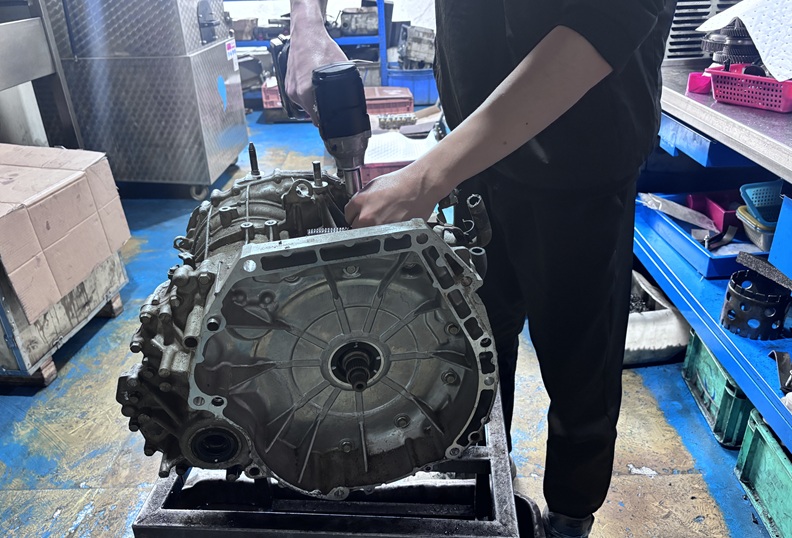
Stickers delaminate, fall off during hot-wash cleaning, or get replaced by a previous rebuilder. The casting stamp is permanent. On most modern units the stamp sits within 15 cm of either the bell-housing face or the pan rail. If you cannot see it, clean a 10 cm square with brake cleaner and inspect under raking light — cast impressions are shallow.
Then read the sticker anyway, because it carries the build sequence that resolves the generation. A photograph of the stamp tells us the family; a photograph of the sticker tells us which generation of that family you are holding. Both are needed, and both fit in one photo frame if you step back 30 cm.
Step detail: cross-check the VIN, do not substitute it
A VIN lookup is a confirmation tool, not an identification tool. Manufacturer catalogues occasionally list a transmission that was superseded mid-year, and grey-import vehicles frequently sit outside the catalogue's market assumptions. Treat the VIN as a second opinion after the housing code, and when the two disagree, tell your supplier — a mismatch is a useful signal, and it usually means the vehicle has had a unit swapped at some point in its life.
04Generation traps: the same code, different parts
This is where experienced buyers still lose money. A code can identify the family perfectly and still leave three non-interchangeable variants on the shelf. The table below lists the traps we handle most often, and what actually decides the part.
| Code | Trap | What actually decides the part | Consequence of getting it wrong |
|---|---|---|---|
| 09G / TF-60SN | Solenoid count and valve body plate layout changed between early and late production | Valve body plate casting number and solenoid connector pattern | Fits the case, faults within the first hundred kilometres |
| 722.9 | Conductor plate and valve body revised at least twice | VGS/TCU part number on the electrical plate label | No communication after fitting; limp mode persists |
| DQ200 | Mechatronic hardware numbers differ across years | The hardware number stamped on the mechatronic body | Software will not code to the vehicle |
| 6F35 | Valve body bore wear profile differs with the updated plate | Plate revision and solenoid pack generation | Repeat pressure loss within months |
| JF011E / JF015E | Valve body and stepper motor generations differ, plus pulley and belt revisions | Valve body production suffix, plus pulley set marking | Judder returns, or the belt rides the wrong sheave angle |
| K114 vs K120 | Later Direct Shift-CVT adds a launch gear | The K number itself | Physically will not assemble correctly |
If the price you are quoted is dramatically below the market for the platform, one of three things is true: the unit is a used core, the generation is a mismatch, or the wear parts were not replaced. All three look identical in a photograph of the outside of the case.
05What our catalog actually covers — the data behind "we stock it"
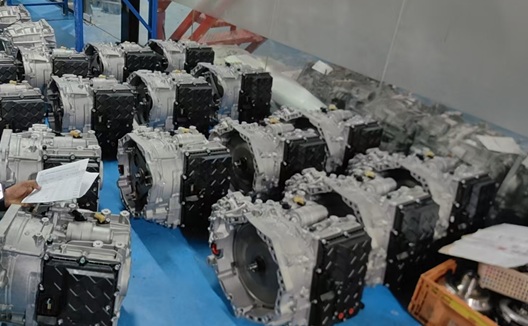
Identification only has value if the identified part exists somewhere. So here is the honest published shape of our catalog: 214 catalogued part numbers across 13 product categories, from complete assemblies through valve bodies, solenoids, control units, CVT pulley and belt sets, overhaul kits and hard parts. Every one of those numbers has its own page, photograph and application data, and the whole catalog is also published as a machine-readable A–Z index.
Reading the data like a buyer
Two practical conclusions follow from the numbers above. First, coverage breadth matters more than headline depth in this business: a workshop that repairs four brands needs four brands of valve body available, not two hundred of one. Second, the CVT weighting tells you where the technical risk sits — with a third of the platform-linked catalog built on belt and chain CVTs, a large share of your identification work will be CVT, and the pulley and belt marking check is not optional.
06The two photographs that prevent wrong-fit orders
We ask for exactly two images on every inquiry, and they resolve the overwhelming majority of fitment questions before a quotation is written:
- Photograph one — the code. Close, in focus, with the full sticker or stamp visible and a coin or ruler for scale. Avoid flash-on-metal; use diffused light from the side.
- Photograph two — the pan or connector side. This shows the electrical connector pattern, the number of solenoids if visible, and whether the unit has been rebuilt before.
If the vehicle is present and drivable, add a third: the instrument cluster with the fault code visible. A code plus a code is a much stronger signal than either alone, which is exactly why our valve body diagnosis guide maps symptoms to part numbers rather than leaving you to describe a noise over chat.
07How we confirm fitment before quoting
Identification on the buyer's side is only half the loop. On ours, every inquiry passes three checks before a quotation exists: the code is mapped to a catalog SKU, that SKU is matched against the application list for the platform, and the available generation is confirmed against stock. When a requested generation is not on the shelf, we say so and offer the documented alternatives instead of shipping the nearest-looking unit.
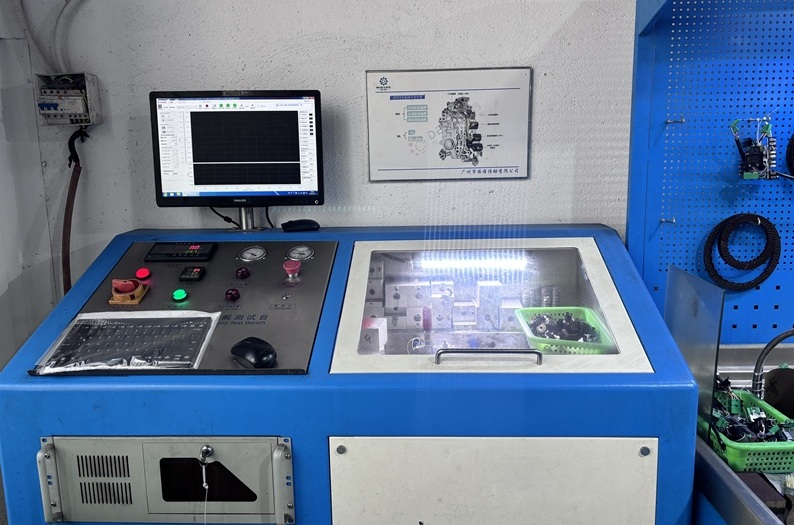
Every complete assembly leaves the plant with a dyno record and an identification tag matching its photograph, so the unit that arrives at your dock is the unit you approved on screen. Where a specification cannot be verified against manufacturer data, we say so in writing and confirm it with the customer — we do not fill gaps with invented numbers. The related question of how much of a unit to replace is covered in new vs remanufactured vs used, and the diagnosis path when the code is known but the fault is not is in valve body failure symptoms.
08Frequently asked questions
Where exactly is the transmission model code located?
On most automatics it is stamped or stickered on the transmission housing. Practical starting points: VW and Audi DSG units carry a white sticker on the housing side with the mechatronic number on the connector face; ZF 6HP and 8HP units are stamped on the left housing side; JATCO CVTs carry a plate on the front of the case next to the valve body cover; Aisin U-series and TF-series units are marked on the bell housing or oil-pan rail; GM 6T units are marked on the converter housing top cover. Always read the casting stamp first, because stickers do not survive hot-wash cleaning.
Can I order transmission parts using the car model and year only?
No — and this is the single most common cause of fitment disputes. The same model year is routinely built with two to four different transmissions depending on engine, drivetrain, market and production date. A 2014 Passat may be a DQ200, a DQ250 or an Aisin TF-60SN. Order against the code on the housing, then confirm with the VIN.
What if the code sticker is missing or unreadable?
Recover the casting stamp first, then the VIN. Where both are inconclusive, send the pan-side or connector-side photographs: the connector pattern, solenoid count and visible casting features usually resolve the family. If a unit has been rebuilt by a third party with replacement labelling, tell us — it changes what we check.
How many transmission families do you actually cover?
The current catalog carries 214 part numbers across 13 product categories, with 48 complete-assembly model families and platform-linked component coverage spanning Aisin, JATCO, ZF, Toyota, GM, Ford, Mercedes, Hyundai and Kia, Chrysler, Punch Powertrain, PSA and Renault, Chery and DSI platforms. The full A–Z index is published on this site, so you can check coverage before you ask.
Do you check the VIN, or do you rely on the code alone?
Both, in that order. The housing code identifies the unit; the VIN is used as confirmation. When the two disagree, we treat it as a signal that the vehicle's transmission may have been replaced previously, and we resolve it with the customer before quoting rather than assuming.
How fast can a unit be confirmed and shipped?
Fitment confirmation is normally returned in writing within four business hours of receiving the code and photographs. Lead time then depends on platform and stock depth; every quote states it explicitly. Minimum order is one piece, and mixed pallets across categories are normal rather than an exception.
Send the housing code, the VIN and the two photographs. You will get a fitment confirmation, not a request for more information — and if the generation you need is not in stock, you will be told that too.

Written by the TRANSMESUN Engineering Team
Guangzhou Meishun Automatic Transmission Co., Ltd. rebuilds, tests and exports automatic transmission assemblies and components from a CE-certified plant in Huadu, Guangzhou — 10 production lines, 2,000 m², 20 test benches and 100% full-load dyno testing on complete units.